
The Atelier Journal
Mineral Pigments & Effervescence: Identifying Genuine Mouth-Blown Studio Glass
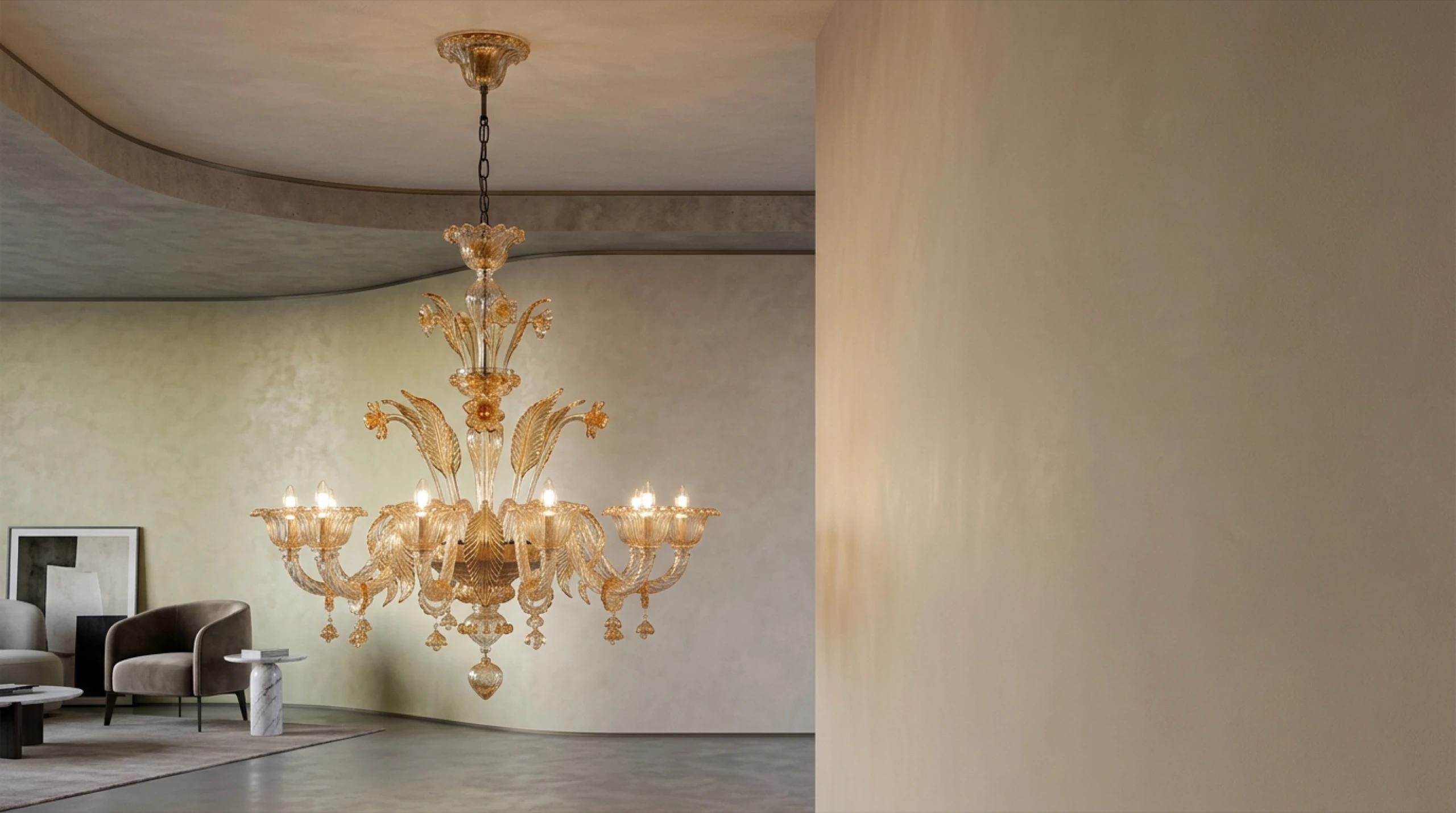
With the market flooded by machine-pressed acrylic and automated mold glass, discerning whether a lighting fixture is genuinely hand-blown can seem daunting. Here are the four undeniable physical hallmarks of true studio glass.
1. The Presence of Microscopic Aeration (Effervescenza)
In automated industrial glassmaking, chemical clarifying agents and vacuum degasification are used to eliminate all internal air. The result is completely flat, sterile glass.
In an authentic artisanal furnace, molten gathers are turned on the blowpipe and layered by hand. Tiny microscopic bubbles—historically called effervescenza—naturally become trapped within the cooling glass matrix. These tiny spheres are not defects; they are the light-refracting soul of genuine mouth-blown glass, creating celestial depth under illumination.
2. Natural Wall Thickness Variations and Pontil Traces
Industrial stamped glass has identical millimeter thickness throughout because it is pressed between steel dies. Hand-blown glass, by contrast, responds organically to the blower’s breath and centrifugal rotation.
Inspect the rim and edges of a glass shade or petal: you will notice subtle organic gradations where the molten glass flowed naturally. On the mounting base, you may also observe the faint ground trace of the pontil mark—the point where the piece was detached from the iron rod before final furnace fire-polishing.
3. Depth of Mineral Oxide Pigmentation
Mass-market colored glass is frequently painted with an external organic dye or coated with a superficial plastic film that fades, peels, or scratches over time.
Quality hand-blown glass is coloured in the melt using ancient elemental mineral oxides: cobalt for royal blues, selenium and gold chloride for rich rubies, and iron-sulfur compounds for warm honey amber. Because the pigment is fused into the molecular structure of the glass, it will never fade, peel, or discolor, even after years of sunlight and lamp heat.
“Fake glass is flat and uniform. Authentic hand-blown glass is alive—it dances with the sun during the day and glows with furnace warmth at night.”
4. Weight and Acoustic Ring
Handcrafted studio soda-lime glass possesses a distinct density and resonant ring when gently tapped compared to lightweight acrylic or hollow pressed glass. When you lift a Murano Lamp glass petal, its substantial heft reflects the solid purity of true artisan glass.
 Chandeliers
 Ceiling Lights
 Wall Sconces
 Pendant Lights
 Table Lamps